ENDURO
ENDURO MOTORCYCLE RACING
An Endurance Test of Rider Skill, Machine Reliability and Technical Ability
Introduction
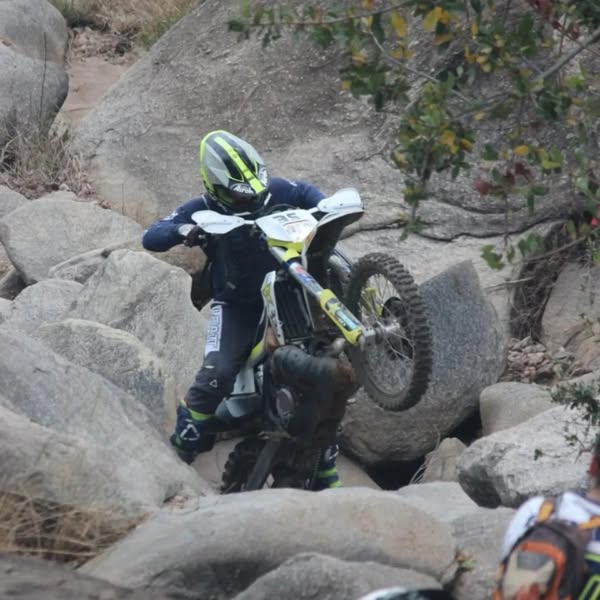
Enduro is a motorcycle racing discipline conducted over challenging off-road courses that test a rider's endurance, technical ability, navigation skills and the reliability of the motorcycle. The courses typically traverse natural terrain, including forests, mountains, rocky trails, rivers and muddy tracks, presenting riders with a variety of obstacles and changing riding conditions.
Unlike motocross, which is predominantly conducted on purpose-built circuits, Enduro takes place over extended off-road routes, often incorporating multiple stages and checkpoints. The discipline places considerable emphasis on consistency, time management and the ability to negotiate difficult terrain over prolonged periods.
Enduro motorcycles are purpose-built to withstand these demanding conditions. They are equipped with durable frames, specialised suspension systems, reliable braking components and engines designed to deliver consistent power across varying terrain.
Today, Enduro remains one of the principal disciplines of off-road motorcycle sport, attracting professional competitors and amateur riders through national, continental and international championships.
The Origins and Evolution of Enduro
The origins of modern Enduro can be traced to early twentieth-century European motorcycle trials, when manufacturers and riders began testing the durability and performance of motorcycles over demanding terrain and extended distances.
A significant milestone in the development of the discipline was the introduction of the International Six Days Trial (ISDT) in 1913. The event, subsequently renamed the International Six Days Enduro (ISDE), became one of the most important competitions in international motorcycle sport. It was conceived as a demanding multi-day test of both rider and machine, incorporating varied terrain, time-controlled sections and designated liaison routes.
During its formative years, the ISDT featured motorcycles with engine capacities of 350cc, 500cc, 750cc and 1,000cc. Manufacturers such as Indian, Scott, Triumph and Condor were among the prominent international competitors, while Italian manufacturers including Garelli, Benelli, Bianchi, Frera and Gilera also established a presence in the sport.
As the discipline developed, the range of competing motorcycles expanded to include smaller engine capacities of 125cc, 175cc and 250cc. Manufacturers such as Harley-Davidson, Royal Enfield, BSA, Norton, Puch and DKW entered the competitive landscape, while Spanish manufacturer Montesa also became increasingly prominent.
The 1940s witnessed further developments in motorcycle design. Manufacturers such as Jawa, Maico and CZ introduced motorcycles featuring improved engine configurations, simplified braking systems and suspension designs that contributed to the evolution of off-road machinery.
The late 1950s and 1960s marked another important period in the development of Enduro. Bultaco entered competition in 1958, while the growing popularity of the discipline attracted riders from outside the traditional motorcycle racing fraternity. In 1964, American actor and motorsports enthusiast Steve McQueen participated in the ISDT aboard a Triumph TR6 SC, bringing additional international attention to the event.
The number of manufacturers participating in Enduro competitions continued to increase, with Simson, Zündapp and Moto Guzzi among those establishing a presence. BMW also developed its two-cylinder boxer motorcycles in 600cc and 750cc configurations, with German rider Herbert Schek achieving notable competitive success on the machines.
Technological Development
The 1970s were characterised by experimentation and innovation in motorcycle engineering. Manufacturers explored alternative engine configurations and transmission systems, including rotary engines and automatic transmissions. Rokon introduced the RT-340 TCR Automatic Enduro in 1973, while Sachs experimented with a 335cc motorcycle featuring a pull starter and automatic transmission. Italian manufacturers SWM and Gilera also recorded competitive successes during this period.
The 1980s ushered in significant advances in suspension and engine technology. Developments in rear suspension systems improved motorcycle handling and stability over difficult terrain. BMW's R 80 GS became an important model in the evolution of adventure-oriented motorcycles, while Yamaha introduced its Yamaha Energy Induction System (YEIS), designed to improve engine response. MZ also contributed to developments in ignition technology and exhaust-valve systems for two-stroke engines.
During the 1990s, modified motocross motorcycles became increasingly common in Enduro competitions. Single-cylinder motorcycles remained dominant, with developments in motorcycle design also influenced by machines used in long-distance rally competitions, including the Yamaha Super Ténéré.
Over subsequent decades, Enduro technology continued to evolve, producing motorcycles that combine durability, improved suspension performance, responsive engines and greater adaptability across different terrain. Innovations developed through competitive Enduro have also influenced the wider motorcycle industry, particularly in the development of dual-purpose and adventure motorcycles.
The evolution of Enduro motorcycles reflects the discipline's enduring purpose: to test the limits of rider and machine while providing a platform for the development of technologies that continue to influence motorcycle design.
The Enduro Racing Format
Enduro competitions traditionally operate under a time-controlled, multi-stage format. Riders are required to complete designated routes and timed special stages according to a prescribed schedule.
The competition generally incorporates two types of sections:
Special Stages: These are timed sections in which riders compete against the clock. Their performance in these sections contributes directly to the competitive results.
Liaison Sections: These connect the special stages and must be completed within allocated time limits. Riders are required to maintain the prescribed schedule and report at designated time controls.
Timekeeping is an essential component of Enduro competition. Riders may incur penalties for arriving too early or too late at designated time controls, missing checkpoints, deviating from the prescribed route or failing to comply with the competition regulations.
Depending on the event format, riders may also be allocated specific refuelling and motorcycle servicing periods. Failure to comply with these requirements can attract penalties.
The overall classification is determined by the applicable competition regulations, taking into account special-stage performance and any time penalties incurred.
Enduro events vary in duration and format. National and amateur competitions may run for several hours, while professional and international events can extend over multiple days. The International Six Days Enduro is a particularly demanding example, requiring competitors to demonstrate consistency, endurance and mechanical reliability throughout six days of competition.
Enduro Motorcycle Characteristics
Enduro motorcycles are specifically designed to operate in demanding off-road environments over extended periods. Their construction reflects the need to balance durability, manoeuvrability, performance and rider comfort.
Key characteristics include:
• Suspension: Long-travel suspension systems designed to absorb impacts and maintain stability over rocks, roots, ruts and uneven terrain.
• Engine performance: Engines configured to deliver usable power and torque across a broad range of engine speeds, particularly at low and medium revolutions.
• Frame and protection: Strong frames and protective components designed to withstand impacts and the stresses associated with technical off-road riding.
• Braking systems: Reliable braking components that provide controlled stopping power across varying surfaces and gradients.
• Fuel capacity: Larger fuel tanks, where required by the competition format, to support extended riding distances.
• Lighting: Headlamps and other lighting equipment for motorcycles required to operate on extended routes or under applicable competition regulations.
• Transmission: Gear ratios suited to a combination of slow technical sections and faster off-road terrain.
Leading manufacturers in the discipline include KTM, Husqvarna, Honda, Yamaha, Beta and Sherco. Their Enduro models have established a strong presence in national and international competitions.
Enduro and Motocross: Understanding the Difference
Although Enduro and Motocross are both off-road motorcycle disciplines, they differ considerably in their competition formats, terrain and technical requirements.
Motocross is conducted on purpose-built circuits incorporating jumps, berms and other artificial obstacles. Competitions generally consist of relatively short races in which riders compete directly against one another over a prescribed time or number of laps.
Enduro, on the other hand, is predominantly conducted over natural terrain and extended routes. The courses may traverse forests, mountains, rocky trails and river crossings, requiring riders to negotiate a wider variety of obstacles over longer periods.
The motorcycles also reflect these differences. Motocross motorcycles are generally configured for speed, acceleration and manoeuvrability on closed circuits. Enduro motorcycles are designed for extended off-road use, with features such as wider gear ratios, larger fuel tanks, lighting equipment and suspension settings suited to varying terrain.
Consequently, while Motocross places considerable emphasis on speed and direct competition, Enduro places additional demands on endurance, consistency, navigation and mechanical reliability.
Rules and Regulations
Enduro competitions operate under technical and sporting regulations intended to promote fair competition, rider safety and the proper conduct of events.
The Fédération Internationale de Motocyclisme (FIM) establishes the international regulatory framework for the discipline, with national and continental federations implementing the applicable rules within their respective competitions.
The principal areas regulated include:
1. Timekeeping and Checkpoints
Riders must observe the prescribed competition schedule and report at designated time controls and checkpoints. Penalties may be imposed for early or late arrival, missing checkpoints or failing to complete designated sections within the allocated time.
2. Course and Route Compliance
Competitors must follow the marked course. Cutting the route, taking unauthorised shortcuts or missing designated sections may result in time penalties or disqualification.
Organisers use route markings, arrows, tape and flags to guide riders through the competition course.
3. Motorcycle Technical Regulations
Motorcycles must comply with the technical requirements applicable to the competition category. These may cover engine capacity, exhaust systems, noise emissions, lighting, number plates and general motorcycle safety.
4. Protective Equipment
Riders are required to wear approved protective equipment, including helmets, gloves, boots, goggles and body protection, in accordance with the applicable regulations.
5. Rider Conduct and Penalties
Competitors are expected to demonstrate sporting conduct and comply with instructions issued by race officials. Dangerous riding, unsportsmanlike behaviour, unauthorised motorcycle modifications or interference with timekeeping equipment may attract penalties, including exclusion from the competition.
Rider Skills and Physical Demands
Enduro is among the physically demanding disciplines of motorcycle sport. Success requires a combination of technical riding ability, physical conditioning, concentration and the capacity to maintain performance over extended periods.
Riders must develop several fundamental skills.
Balance and Body Positioning
Maintaining balance is essential when negotiating uneven terrain. Riders must continuously adjust their body position according to the gradient, surface conditions and obstacles ahead. Weight distribution is particularly important when negotiating steep climbs, descents and deep ruts.
Throttle and Clutch Control
Precise throttle and clutch control enable riders to regulate engine power and maintain traction. These skills are particularly important when riding over slippery rocks, muddy sections and other surfaces where excessive acceleration may result in loss of control.
Braking Precision
Riders must develop effective braking techniques to maintain stability and control. Proper use of the front and rear brakes is essential when negotiating steep descents, sharp turns and loose surfaces.
Line Selection and Terrain Reading
The ability to read the terrain and identify suitable riding lines is fundamental to Enduro. Riders must anticipate changes in surface conditions and select routes that provide the best balance between traction, safety and efficiency.
Obstacle Negotiation
Enduro courses frequently include fallen trees, logs, rocks, boulders and other natural obstacles. Riders must develop techniques such as controlled wheel lifts, pivots and measured acceleration to negotiate these challenges.
Endurance and Strength
The duration and intensity of Enduro competitions require substantial cardiovascular fitness and muscular endurance. Riders rely heavily on their forearms, shoulders, legs and core muscles to maintain control of the motorcycle over extended periods.
Physical fatigue can affect grip strength, balance, reaction time and decision-making. Maintaining hydration, muscular conditioning and cardiovascular fitness is therefore essential to competitive performance.
Motorcycle Preparation and Protective Equipment
Proper motorcycle preparation is critical to successful Enduro competition. The demanding nature of the discipline exposes motorcycles to repeated impacts, vibration and varying environmental conditions.
Preparation generally includes suspension adjustments to suit the course, inspection of the braking system, optimisation of tyre selection and gearing, and checks of the motorcycle's mechanical and safety components.
Protective equipment such as skid plates, radiator guards and handguards helps protect vulnerable motorcycle components from damage during competition.
Tyres with deep off-road tread patterns are commonly used to provide traction across loose soil, mud and rocky terrain. Depending on the competition requirements, mousse inserts may be used as an alternative to conventional inner tubes.
Rider safety also depends on appropriate protective clothing and equipment. A complete protective outfit generally comprises:
• Approved motorcycle helmet and goggles.
• Protective gloves.
• Off-road motorcycle boots.
• Riding jersey and trousers.
• Chest and body protectors.
• Knee and elbow guards.
• Neck protection, where appropriate.
Equipment such as Alpinestars Tech 7 boots, Oakley Airbrake goggles and Leatt neck braces are examples of products used in off-road motorcycle sport.
Getting Started in Enduro
Enduro accommodates riders across different levels of experience, from beginners to professional competitors. New riders are encouraged to develop fundamental off-road riding skills before progressing to more demanding terrain and competitive events.
Beginners should start with a motorcycle appropriate to their experience, physical capability and riding environment. Models such as the Honda CRF250F and smaller-capacity KTM EXC motorcycles provide examples of motorcycles used in entry-level off-road riding.
Initial training should focus on throttle control, clutch operation, braking, balance and correct body positioning. Riders can progressively develop these skills on relatively flat dirt surfaces before advancing to forest trails, uneven ground and more technical terrain.
Participation in organised training programmes, local riding clubs and supervised practice sessions provides opportunities to improve riding techniques and develop an understanding of competition procedures.
Regular motorcycle maintenance and the use of appropriate protective equipment should form an integral part of a rider's preparation.
International Enduro Competitions
Enduro has developed into a globally recognised motorcycle sport, with major international championships attracting competitors from across the world.
The Fédération Internationale de Motocyclisme (FIM) is the international governing body responsible for the regulation and development of the discipline.
Among the principal international competitions are:
FIM EnduroGP World Championship
The EnduroGP World Championship is one of the premier international Enduro competitions. It brings together leading riders who compete across a series of events to determine the season's world champions.
International Six Days Enduro (ISDE)
First held in 1913 as the International Six Days Trial, the ISDE is one of the oldest and most prestigious events in motorcycle sport. It is a national-team competition that tests the collective ability of riders and the reliability of their motorcycles over six days of demanding off-road competition.
FIM Hard Enduro World Championship
Hard Enduro is a specialised form of off-road motorcycle competition characterised by exceptionally challenging natural terrain and technically demanding obstacles. Events such as Erzbergrodeo, Red Bull Romaniacs and Hixpania are recognised examples of this discipline.
These competitions demonstrate the diversity of Enduro, from traditional time-controlled racing to extreme off-road challenges that test the limits of rider skill and motorcycle capability.
The Enduring Appeal of Enduro
From its origins in the early twentieth-century European trials to the highly developed international championships of today, Enduro has remained a discipline defined by the relationship between rider skill and motorcycle reliability.
Its continued evolution has been driven by riders, manufacturers and competition organisers who have consistently tested the limits of motorcycle engineering and human endurance.
The motorcycles developed for Enduro have influenced the wider motorcycle industry, contributing to advances in suspension, engine performance, durability and off-road capability.
For professional competitors, Enduro represents the pursuit of technical excellence and competitive achievement. For recreational riders, it offers an opportunity to explore challenging natural terrain and experience the versatility of off-road motorcycling.
Ultimately, Enduro remains a demanding test of endurance, precision and adaptability. It is a discipline in which success depends not only on how fast a rider can travel, but also on the ability to maintain control, manage time, overcome obstacles and ensure that both rider and machine reach the finish.
Enduro in Kenya
The History of Enduro Motorcycle Racing in Kenya
Enduro motorcycle racing in Kenya dates back to the 1970s, when competitions were held at the Mathatani Scramble race track. Subsequent events were staged at the Golf Range, Carnivore Quarry and the Motocross Circuit.
However, the 1980s and 1990s witnessed a decline in motorcycle racing participation, resulting in the disappearance of several motorcycle racing disciplines from the Kenyan motorsports calendar. Enduro, Trials, Speedway and Tarmac Circuit Racing were among the disciplines that ceased to have organised competitions during this period. Motocross remained the longest-running motorcycle racing championship in the country.
The Revival of Enduro: 1999–2001
Efforts to reintroduce Enduro competition culminated in 1999 with the conception of the Kenya National Enduro Championship. The East African Motor Sports Club (EAMSC) organised the first Enduro race at Elementaita on Sunday, 1 August 1999.
At the time, EAMSC's Motocross Chairman, Khalid Darr, described the event as a practice run ahead of the African Motorcycle Union (AMU) Championship scheduled for 2000.
The Elementaita course presented competitors with a demanding combination of terrain and elevation. Starting south of Lake Elementaita, the route climbed towards the summit of Mount Eburru before winding through Otutu Forest and continuing into Eburru Forest. The course provided an early demonstration of the technical and endurance challenges associated with Enduro racing.
In December 2000, Enduro was formally included in the Automobile Association of Kenya's (AA Kenya) Competitions Committee 2001 motorsports calendar, marking an important step towards the establishment of a structured national championship.
The 2001 season commenced with competitions held in Nakuru on 13 and 14 January. The two-wheel championship formed part of an eight-round series jointly organised by the East African Motor Sports Club (EAMSC) in Nairobi and the Rift Valley Motor and Sports Club (RVMSC) in Nakuru. Nakuru hosted three rounds of the championship.
The 2001 Kenya National Enduro Championship (KNEC) was the first series to be sanctioned by the Automobile Association of Kenya. Its introduction generated interest beyond the established motorcycle racing fraternity, attracting rally drivers and former motocross racers, including Ian Duncan, Rory Green, Lee Rose, Steve Anthony and Jet Anthony.
At the conclusion of the inaugural season, Ian Duncan was declared the winner of the 2001 Kenya National Enduro Championship (KNEC), securing his place in the history of organised Enduro competition in Kenya.
KENYA NATIONAL ENDURO CHAMPIONSHIP WINNERS
| NO. | YEAR | KENYA NATIONAL ENDURO CHAMPIONSHIP (EXPERT) CLASS | CLUBMAN CLASS | KENYA NATIONAL ENDURO CHAMPIONSHIP (125CC) CLASS |
| 1 | 2001 | Ian Duncan | ||
| 2 | 2002 | Otto Ulyate | ||
| 3 | 2003 | Francesco Checchini | ||
| 4 | 2004 | Toby Wright | ||
| 5 | 2005 | Alan De Boer | ||
| 6 | 2006 | Harry Guelker | Doungu Smith | |
| 7 | 2007 | Sean Pelling | Salim Walimohamed | |
| 8 | 2008 | Anthony Nielsen | Shivam Vinayak | |
| 9 | 2009 | Steve Anthony | Shivam Vinayak | |
| 10 | 2010 | Andrew Pleasance | Shivam Vinayak | |
| 11 | 2011 | Shivam Vinayak | Shaun Miller | |
| 12 | 2012 | Shivam Vinayak | Shivam Vinayak | |
| 13 | 2013 | Anthony Nielsen | Shivam Vinayak | |
| 14 | 2014 | Shivam Vinayak | Shivam Vinayak | |
| 15 | 2015 | Ben Spinks | Milan Shah | |
| 16 | 2016 | Alan De Boer | Gerald Taylor | |
| 17 | 2017 | Ben Spinks | Callum Hays | |
| 18 | 2018 | Tim Jessop | William Mayer | |
| 19 | 2019 | Ben Spinks | Ryan Anthony |
The 2020 racing season was cancelled due to the Global Covid-19 Pandemic. From 2021 the competition classes were changed to comply with the internationally recongised tiered skill and difficulty classification system.
| NO. | YEAR | GOLD CLASS | SILVER CLASS | BRONZE CLASS | JUNIOR CLASS 3 | JUNIOR CLASS 2 | JUNIOR CLASS 1 |
| 20 | 2021 | Zane Young | Ryan Anthony | Michael Ogwapit | Natalie Kandie | Lionel Laurence | Storm Armstrong-Ogwapit |
| 21 | 2022 | Karan Sehmi | Charan Singh | Hussein Taher | Amaya Sidi | Tommy Cavenagh | Max Cavenagh |
| 22 | 2023 | Shaun Miller | Hussein Taher | Sean Nann | Aidan Stanley | Kigen Mutuma | Jematia Kangogo |
| 23 | 2024 | Karan Sehmi | George Dodds | Tanav Choda | Ngengi Kamau | Gisa Benzinge | Jematia Kangogo |
| 24 | 2025 | Quinn Miller | Oliver Francombe | Aidan Stanley | Ivan Burtsev | Mia Verbeek | Kemboi Kandie |
| 25 | 2026 |